

Ultra-Slim Gastroscope
 JCI Accredited
 ISO Quality
 International Health Tourism Authorization
 Ministry of Culture and Tourism
 Global Hospital Rating
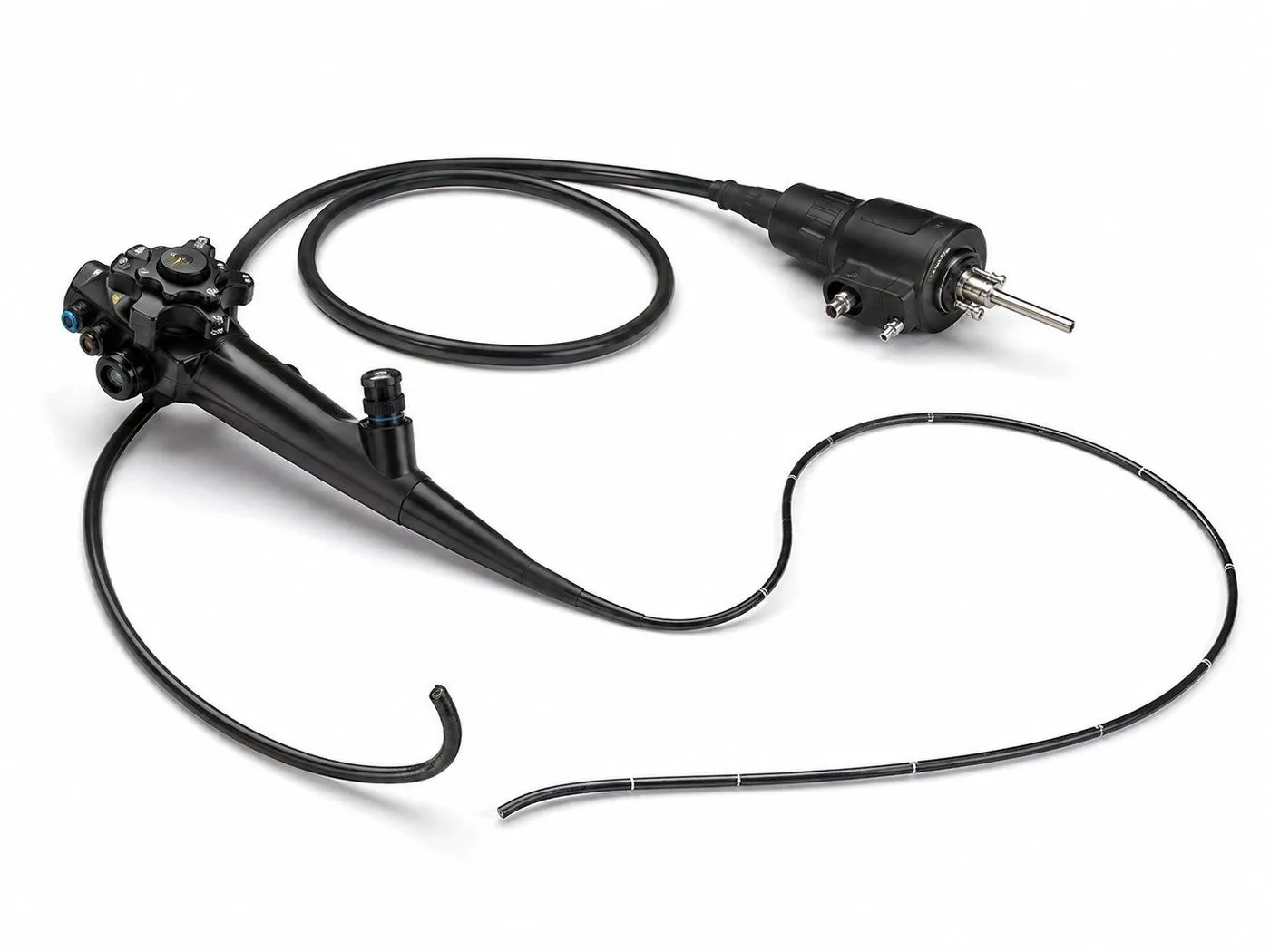
What is an Ultraslim (Transnasal) Gastroscopy?
While a standard gastroscopy system possesses an insertion tube outer diameter of approximately 9 to 10 mm, ultraslim models feature a remarkably reduced diameter of only 5 to 5.4 mm (roughly half the thickness of a standard pencil).
Advanced Technological Features
The ultra-thin caliber of this specialized device is engineered without compromising diagnostic efficacy or structural functionality:
- High-Definition Optical Resolution: Despite the miniaturized diameter, the distal tip integrates high-resolution micro-image sensors (CCD/CMOS chips) and advanced fiber-optic illumination bundles to deliver crisp HD visualization.
- Enhanced Maneuverability: Improved Maneuverability: Because of the ultra-slim architecture’s greater torque and deflection control, traditional endoscopes would not be able to navigate through high-resistance strictures or small anatomical passageways.
- Integrated Instrument Working Channel: Notwithstanding its slender profile, the scope retains a dedicated internal instrument channel. This enables the clinician to introduce micro-forceps to perform tissue sampling (biopsies) or execute minor therapeutic interventions during the live procedure.
Clinical Advantages and Patient Comfort
The primary structural advantage of the ultra-slim gastrosocope is its ability to be introduced via the nasal cavity (transnasal approach). This fundamentally shifts the clinical patient experience:
- The ability to inject the ultra-slim gastrosocope through the nasal cavity (transnasal method) is its main structural benefit. The clinical patient experience is significantly altered by this:
- Gag Reflex Suppression: The scope’s shaft invariably makes contact with the posterior pharyngeal wall and base of the tongue during a routine transoral endoscopy, which causes a strong gag response. By fully avoiding these sensitive gustatory regions and going straight to the laryngopharynx and upper esophageal sphincter, the transnasal method almost avoids emesis (gagging).
- Uninhibited Verbal Communication: Because the oral cavity remains entirely unobstructed throughout the procedure, the patient retains the physiological ability to speak normally, answer clinical questions, or express discomfort to the endoscopist in real time.
- Minimized Need for Systemic Sedation: Deep intravenous sedation or general anesthesia is frequently rendered unnecessary. A simple topical vasoconstrictor and local anesthetic spray applied to the nasal mucosa is typically sufficient. Consequently, this eliminates post-sedation recovery periods, allowing patients to immediately discharge and resume their standard activities of daily living.
Primary Clinical Indications
- Hypersensitive or Highly Anxious Patients: Individuals presenting with severe trypanophobia (fear of medical procedures) or an overactive pharyngeal gag reflex.
- Esophageal and Hypopharyngeal Strictures: Evaluation and mapping of severe luminal narrowings or stenoses impassable by conventional endoscopes.
- Longitudinal Surveillance and Screening: Minimizing procedural cumulative stress in patients requiring frequent, routine follow-ups (e.g., monitoring Barrett’s Esophagus or surveillance of portal hypertension).
- Pediatric Gastroenterology: Highly preferred in select pediatric cohorts as the downsized diameter conforms more naturally to pediatric anatomy.
Conclusion
In summary, ultraslim gastroscopy technology transitions upper gastrointestinal endoscopy from a high-stress, invasive intervention into a highly tolerable, patient-centric diagnostic procedure. It provides the endoscopist with the high-resolution diagnostic data necessary for clinical decision-making while offering the patient a calm, clear, and minimally disruptive clinical experience.
Contact our team
How can we help you? Share your contact details to prepare your request.
How can we help?
By submitting you confirm you have read the privacy information and consent to the processing of your personal data.



