

Microwave Ablation
 JCI Accredited
 ISO Quality
 International Health Tourism Authorization
 Ministry of Culture and Tourism
 Global Hospital Rating
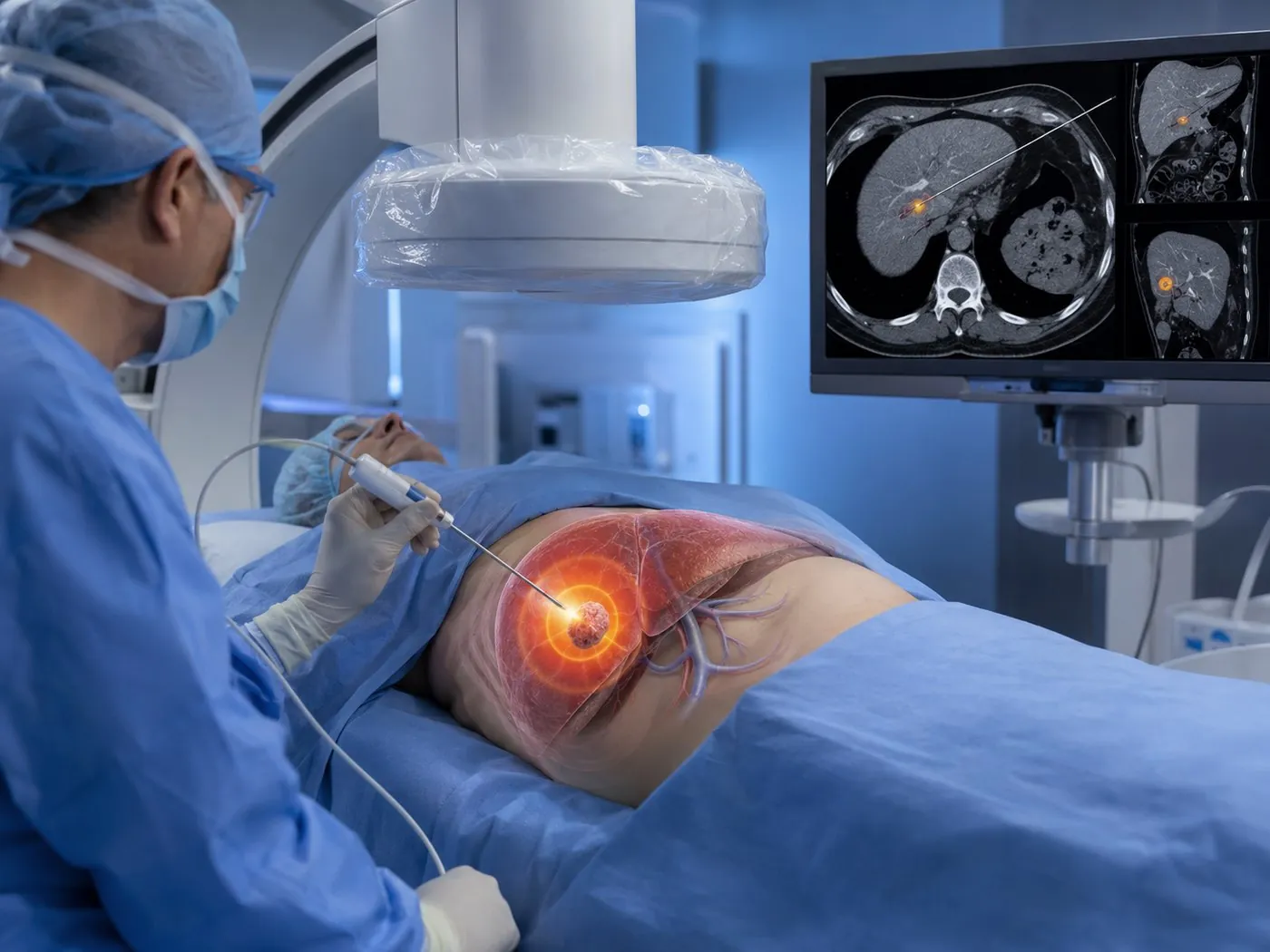
An Introduction to Microwave Ablation (MWA)
Microwave ablation is a treatment that uses heat to destroy (ablate) tumors and other abnormal tissue. A thin probe is placed into the tumor through the skin, so no open surgery is needed.
The Procedure
- Procedural Access: The procedure is typically performed under local anesthesia or conscious sedation. Utilizing real-time imaging guidance (such as ultrasound, CT, or MRI), a thin microwave antenna (probe) is passed through the skin into the center of the tumor.
- Microwave Energy Delivery: High-frequency electromagnetic microwave energy is transmitted through the antenna into the surrounding tissue.
- Thermal Tissue Destruction: The microwaves make water molecules in the tissue move rapidly, which produces heat. The heat destroys the tumor cells (coagulative necrosis).
Clinical Advantages of MWA
- Minimally Invasive Profile: It is a less invasive alternative to open surgical resection, resulting in reduced surgical trauma and a shorter hospital length of stay.
- Recovery: Recovery is usually quick, and many patients return to their daily activities within a few days.
- Tumor Control: It works best for small tumors that have not spread, where it can achieve good local tumor control. Larger tumors may need other or additional treatments.
Clinical Indications and Fields of Use
Microwave ablation is used as a primary or alternative interventional oncological therapy for solid tumors located in organs such as the liver (hepatocellular carcinoma and colorectal metastases), kidneys (renal cell carcinoma), and lungs.
The decision to use microwave ablation is made by a multidisciplinary tumor board, based on the patient’s overall health, the tumor stage and its location. Possible side effects include pain, a mild fever for a few days (post-ablation syndrome) and, less often, bleeding or injury to nearby organs.
Contact our team
How can we help you? Share your contact details to prepare your request.
How can we help?
By submitting you confirm you have read the privacy information and consent to the processing of your personal data.



