

Gamma Knife Radiosurgery
 JCI Accredited
 ISO Quality
 International Health Tourism Authorization
 Ministry of Culture and Tourism
 Global Hospital Rating
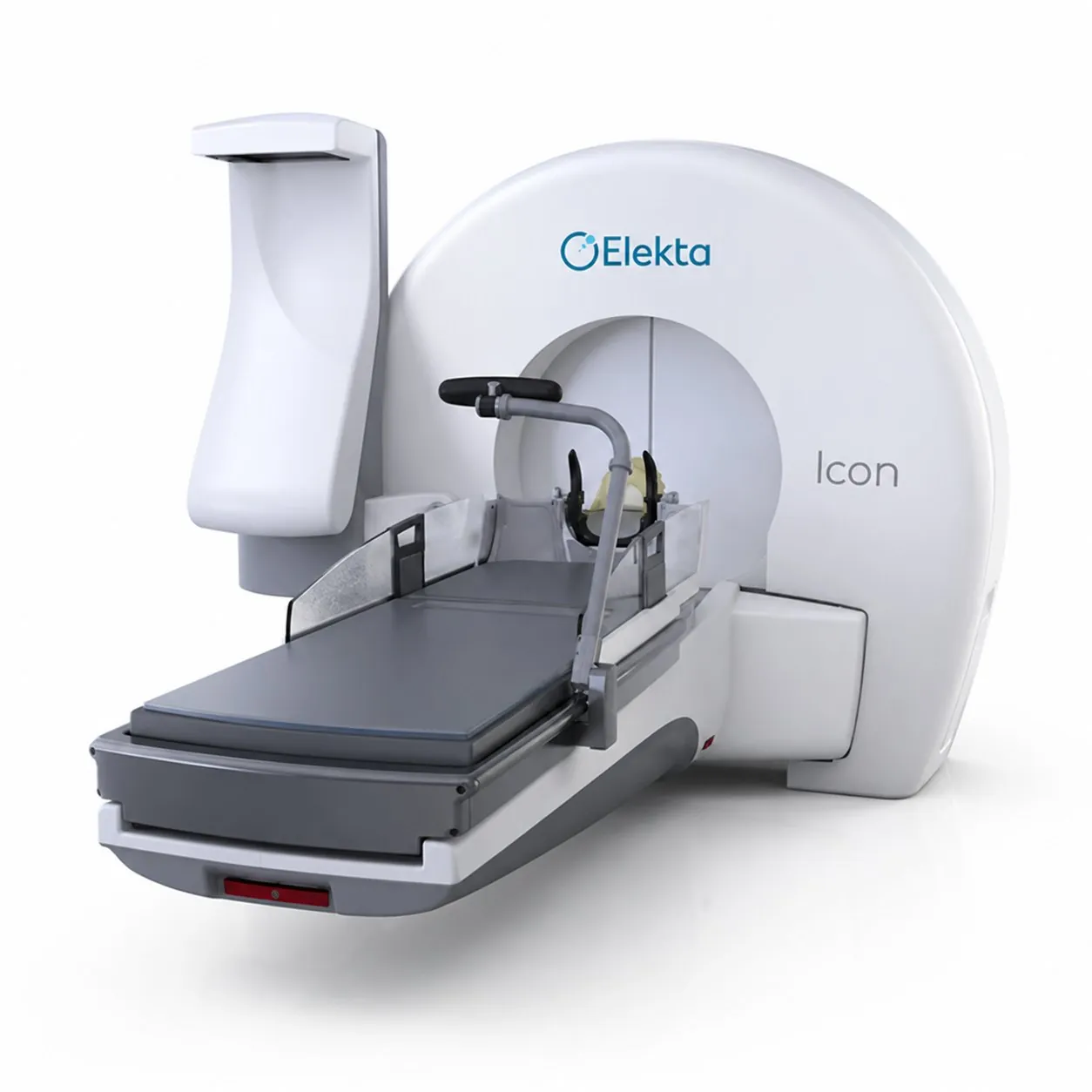
An Introduction to Gamma Knife Radiosurgery
Gamma Knife Radiosurgery is a therapeutic system that targets intracranial lesions by directing a large number (201) of low-energy radiation beams toward the pathological site. Each beam on its own is weak and has little effect on the normal brain tissue it passes through, but the beams meet at the target point. This intersection delivers a high concentration of radiation to the lesion, damaging the DNA of the target cells. Over time, this can stop the lesion from growing, shrink it or, for vascular malformations, close it off.
Advantages of Gamma Knife Radiosurgery
- Non-Invasive Approach: It is called “surgery”, but it requires no incision or craniotomy (opening the skull).
- Minimal Downtime: Patients are typically able to return to their normal social and professional activities just one day after the procedure.
- No General Anesthesia: The procedure is usually done without general anesthesia, so the risks of general anesthesia are avoided.
- Outpatient Modality: Most patients go home on the same day.
- Unified Surgical Continuity: The same neurosurgeon performs both the open surgical evaluation and the Gamma Knife planning. This continuity can help with treatment planning and follow-up.
- Risk Profile: Treatment-related mortality risk is less than 0.1%.
- Permanent neurological deficit risk is below 2%.
- Transient neurological deficit risk is below 3%.
Stages of Gamma Knife Radiosurgery Treatment
1. Stereotactic Frame Placement
The initial phase involves fitting a specialized stereotactic frame onto the patient’s head under local anesthesia. Most patients feel only pressure and a temporary tightening sensation, which typically eases within 3 to 5 minutes.
2. Neuroradiological Imaging
With the stereotactic frame and a specialized MRI head coil in place, high-resolution neuroimaging sequences (such as MRI or CT) are performed to map the brain’s internal structures.
3. Dosimetric Treatment Planning
The acquired images are transferred into specialized treatment planning software. The neurosurgeon and medical physicist outline the target lesion and calculate the exact radiation dose distribution.
4. Delivery of Treatment
Once the planning phase is finalized, the patient is positioned on the treatment couch. The active radiation delivery duration ranges from 20 minutes to 2 or 3 hours, depending on the target geometry. The radiation itself cannot be felt.
Gamma Knife Radiosurgery Compared With Conventional Radiotherapy
Gamma Knife radiosurgery is designed for high anatomical selectivity: the radiation dose is concentrated on the target, while the surrounding healthy brain tissue (parenchyma) receives a much lower dose.
In contrast, Conventional Radiotherapy exposes a larger volume of nearby healthy tissue to radiation along with the tumor. A course of conventional radiotherapy may take about 30 separate sessions, while Gamma Knife treatment is usually completed in a single session.
Frequently Asked Questions (FAQ)
What pre-procedural preparations should a patient complete before undergoing Gamma Knife radiosurgery?
Patients preparing for a Gamma Knife session should adhere to the following guidelines:
- Provide your physician with a comprehensive list of your current medications. You will be instructed on which medications can or cannot be taken on the morning of the procedure.
- Wash your hair and scalp thoroughly with shampoo either the night before or the morning of the procedure.
- Wear loose, comfortable clothing with no metal components (such as zippers, underwires, or metal buttons). Do not wear jewelry, watches, or hairpins.
- Empty your pockets prior to treatment. Electronic devices, mobile phones, and magnetic cards (such as credit cards) are not allowed inside the treatment room.
Can this treatment be safely applied to elderly patients or those with severe systemic co-morbidities?
Often, yes. Gamma Knife radiosurgery can be a suitable option for older people and for patients for whom open surgery or general anesthesia carries a high risk. Your doctor will assess whether it is right for you.
Is the patient put to sleep (under general anesthesia) during Gamma Knife radiosurgery?
No, the patient remains awake throughout the procedure. However, mild anxiolytics or sedatives can be administered to patients experiencing anxiety, provided they are clinically appropriate. The clinical team maintains continuous real-time audio communication via a microphone and visualizes the patient throughout the entire session via closed-circuit monitors.
Does the patient’s head need to be shaved for Gamma Knife radiosurgery?
No, shaving the patient’s hair is not required for this procedure.
Does the treatment cause alopecia (hair loss)?
No, Gamma Knife radiosurgery does not cause generalized hair loss. In rare cases, when the target is close to the scalp, a small patch of hair may thin temporarily.
How long does it take for Gamma Knife radiosurgery to show clinical efficacy?
The therapeutic timeline varies significantly depending on the underlying pathology. The targeted response can manifest anywhere from a few months to several years. Following treatment, patients are monitored through routine follow-up appointments scheduled by their neurosurgeon.
Is Gamma Knife radiosurgery a safe and proven modality?
Gamma Knife radiosurgery has been studied extensively and is an established treatment. In experienced centers, the risk of death is very low (less than 1 in 100,000), and the risk of permanent neurological deficit remains below 1–2%.
What are the potential side effects of Gamma Knife radiosurgery?
Following treatment, localized, radiation-induced transient edema (swelling) may develop within the tumor or adjacent normal tissues. This swelling is usually managed with medicines such as corticosteroids and rarely causes permanent problems. Other possible effects include headache, tiredness or, depending on the target, a temporary worsening of symptoms.
When can the patient resume daily activities?
Because this is an outpatient, same-day procedure, patients are discharged on the day of treatment and can usually return to work and social routines the following day.
What types of brain tumors can be treated with Gamma Knife radiosurgery?
This treatment can be used for both benign brain tumors (meningiomas, pituitary adenomas, acoustic neuromas/vestibular schwannomas, etc.) and malignant brain tumors (brain metastases, select glial tumors, etc.). Beyond oncological indications, Gamma Knife is also utilized to treat intracranial vascular malformations, such as arteriovenous malformations (AVMs) and cavernomas.
Contact our team
How can we help you? Share your contact details to prepare your request.
How can we help?
By submitting you confirm you have read the privacy information and consent to the processing of your personal data.



