

Extracorporeal Shock Wave Lithotripsy (ESWL)
 JCI Accredited
 ISO Quality
 International Health Tourism Authorization
 Ministry of Culture and Tourism
 Global Hospital Rating
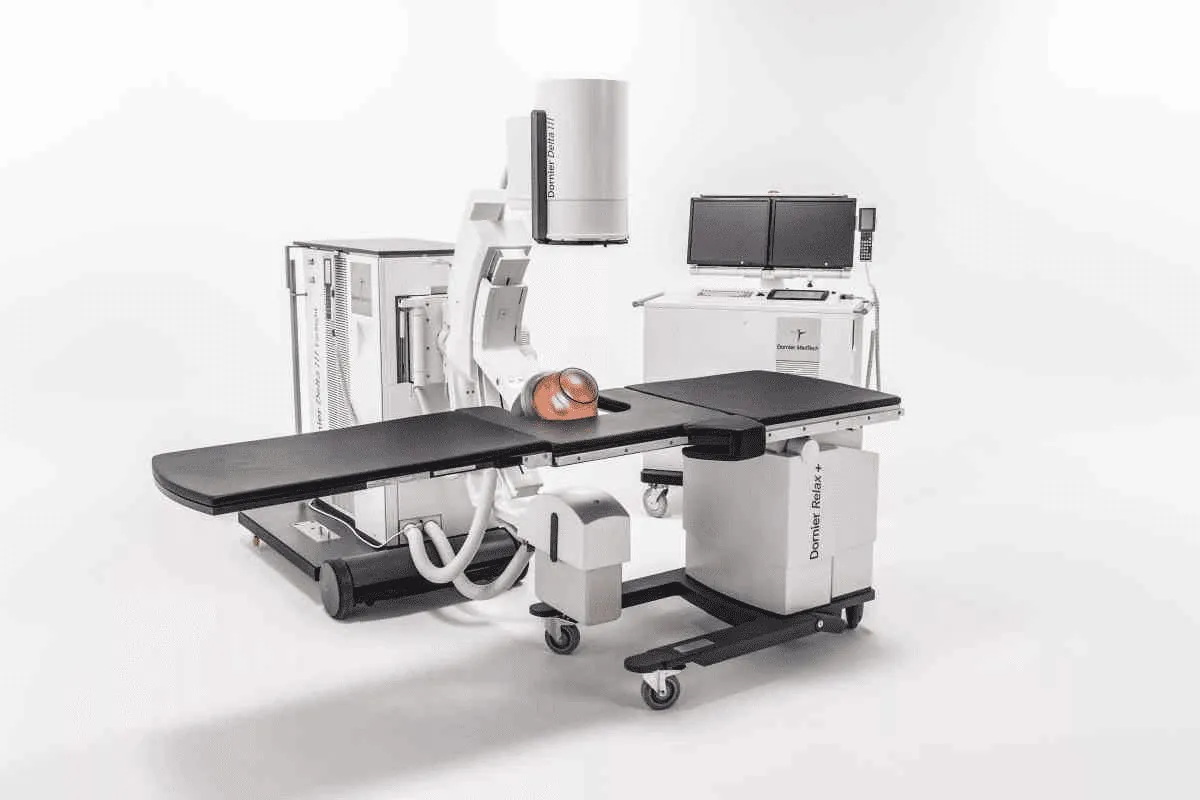
Extracorporeal Shock Wave Lithotripsy (ESWL) is a non-invasive treatment for urinary stones (calculi). It breaks stones into small pieces using shock waves sent from outside the body, without any incisions.
The Working Principle of ESWL
ESWL focuses acoustic shock waves (a form of sound energy) onto the stone:
- Shock Wave Generation: An energy source inside the device (typically electromagnetic or piezoelectric) generates high-energy acoustic shock waves.
- Targeting and Focusing: Utilizing ultrasound or fluoroscopy (real-time X-ray) guidance, these shock waves are focused on the stone.
- Fragmentation: The shock waves pass through soft tissues with little effect; however, when they encounter a high-density, hard mass like a stone, they release mechanical energy. This energy disrupts the structural integrity of the stone, breaking it into small, sand-like fragments.
- Natural Elimination: The fragments then usually pass out of the body in the urine. Drinking plenty of fluids helps this process.
Clinical Indications for ESWL
ESWL is not suitable for all types of urinary calculi. Selection is generally based on the following clinical criteria:
- Stone Size: It works best for kidney stones smaller than 2 cm in diameter.
- Stone Location: It tends to work best for stones in the upper and middle calyces of the kidney, as well as the upper segment of the ureter (urinary tube).
- Stone Composition (Hardness): Very hard stones (such as cystine or calcium oxalate monohydrate) may not break up easily with shock waves.
Clinical Advantages of ESWL
- Non-Surgical Modality: It requires no incisions, punctures, or endoscopic entry into the body.
- Minimal Anesthesia Requirements: General anesthesia is rarely needed; the procedure is usually done with pain relief medicines or light sedation.
- Rapid Recovery: It is an outpatient procedure; most patients go home the same day and soon return to their daily activities.
- Repeatability: If the stone is not fully fragmented during the initial session, the procedure can be repeated over multiple sessions as clinically required.
Post-Procedural Management and Patient Care
Following stone fragmentation, the elimination phase begins. During this period:
- Drinking plenty of water helps flush out the stone fragments.
- Light physical activity, such as walking, may help the fragments pass.
- Alpha-blockers or other medical therapies prescribed by the physician may be used to relax the urinary tract and ease passage.
Stone location, size and composition all affect how well ESWL works. Passing the fragments can be painful, and blood in the urine is common for a short time. Contact your doctor if you have a fever, severe pain or cannot pass urine. ESWL is not suitable during pregnancy or for people with certain bleeding disorders.
Contact our team
How can we help you? Share your contact details to prepare your request.
How can we help?
By submitting you confirm you have read the privacy information and consent to the processing of your personal data.



