

Enhanced External Counterpulsation (EECP)
 JCI Accredited
 ISO Quality
 International Health Tourism Authorization
 Ministry of Culture and Tourism
 Global Hospital Rating
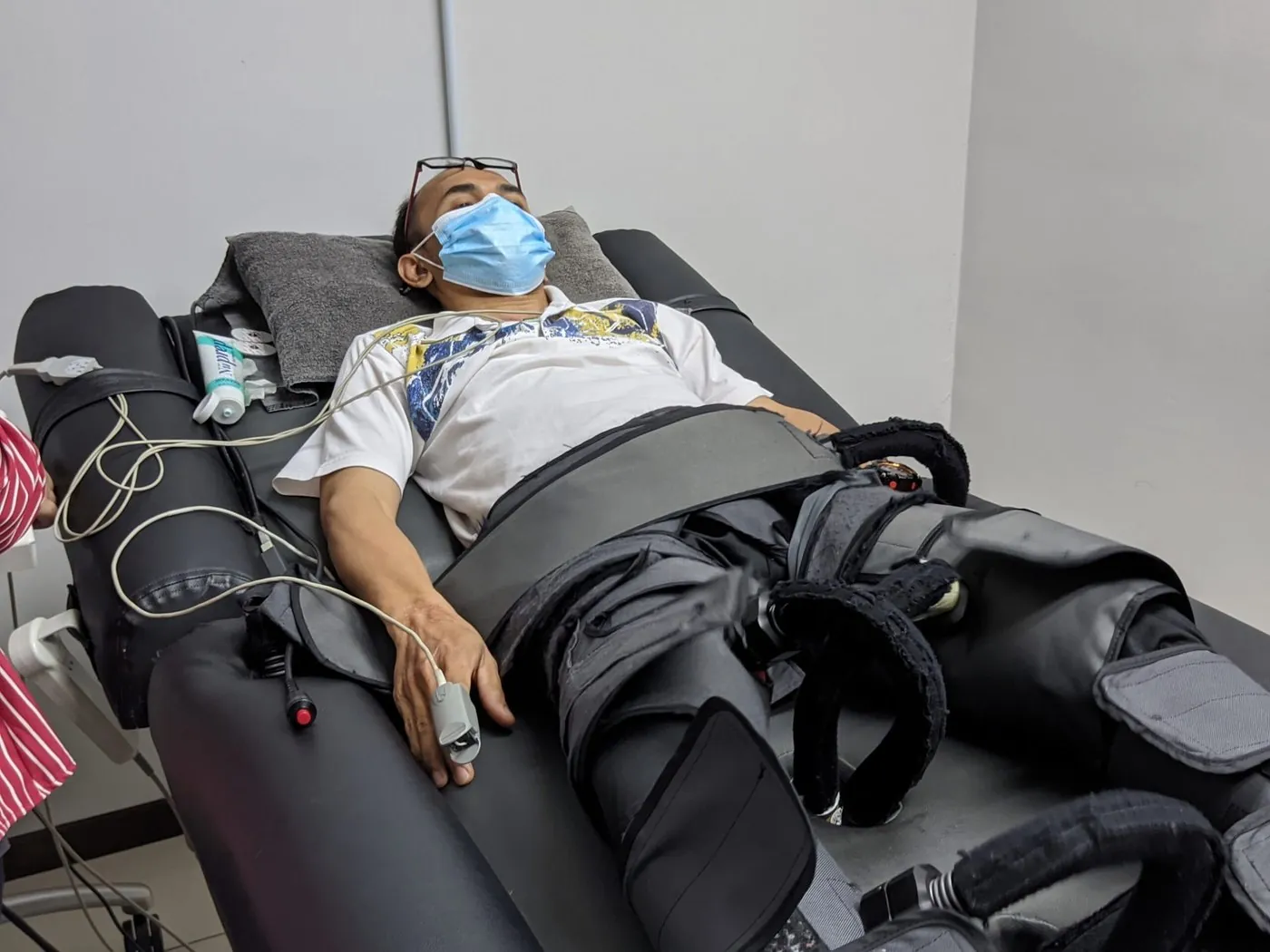
EECP (Enhanced External Counterpulsation) Therapy
Enhanced External Counterpulsation (EECP) is a non-invasive treatment in which cuffs wrapped around the legs inflate and deflate in time with the heartbeat. This helps push more blood toward the heart. EECP has been cleared by the U.S. Food and Drug Administration (FDA) for the treatment of angina pectoris, heart failure, acute myocardial infarction, stable and unstable angina, and cardiogenic shock. It has also been studied in erectile dysfunction caused by vascular disease and in Parkinson’s disease, but the evidence in these areas is more limited.
A standard course of EECP consists of a total of 35 hours, administered 1 hour per day, 6 days a week.
This modality is officially endorsed by the Turkish Society of Cardiology and the Turkish Medical Association.
Effects of EECP on Circulation
- Natural Bypass Vessels: By improving blood flow to the heart, it may encourage the development of small natural bypass vessels.
- Angiogenesis: It may support the formation of new collateral blood vessels (collateralization) in stenotic (narrowed) or occluded segments of the coronary arteries.
- Myocardial Contractility: It may help the heart muscle pump more efficiently.
- Systemic Perfusion: It can increase blood flow to other organs, particularly the kidneys and the brain.
Patient Selection for EECP
- Patients for whom coronary artery bypass graft (CABG) surgery or percutaneous coronary intervention (balloon/stent angioplasty) is not technically possible due to unfavorable diffuse vascular anatomy.
- Patients who are deemed unfit for CABG or coronary angioplasty due to severe comorbidities.
- Patients who experience persistent symptoms (refractory angina) despite undergoing standard revascularization procedures or receiving maximal optimized medical therapy.
- Patients with cardiomyopathy who have developed heart failure.
- Patients who have previously undergone CABG or stent placement but have developed restenosis (re-narrowing of the vessel).
Possible Outcomes After Treatment
After a full course of EECP, many patients report:
- Less frequent or less severe chest pain (angina).
- A decreased dependency on cardiac medications.
- Better exercise tolerance and ability to carry out daily activities.
- Improved quality of life.
- In some patients, improved sexual function.
Contact our team
How can we help you? Share your contact details to prepare your request.
How can we help?
By submitting you confirm you have read the privacy information and consent to the processing of your personal data.



