

Endoscopic Submucosal Dissection (ESD)
 JCI Accredited
 ISO Quality
 International Health Tourism Authorization
 Ministry of Culture and Tourism
 Global Hospital Rating
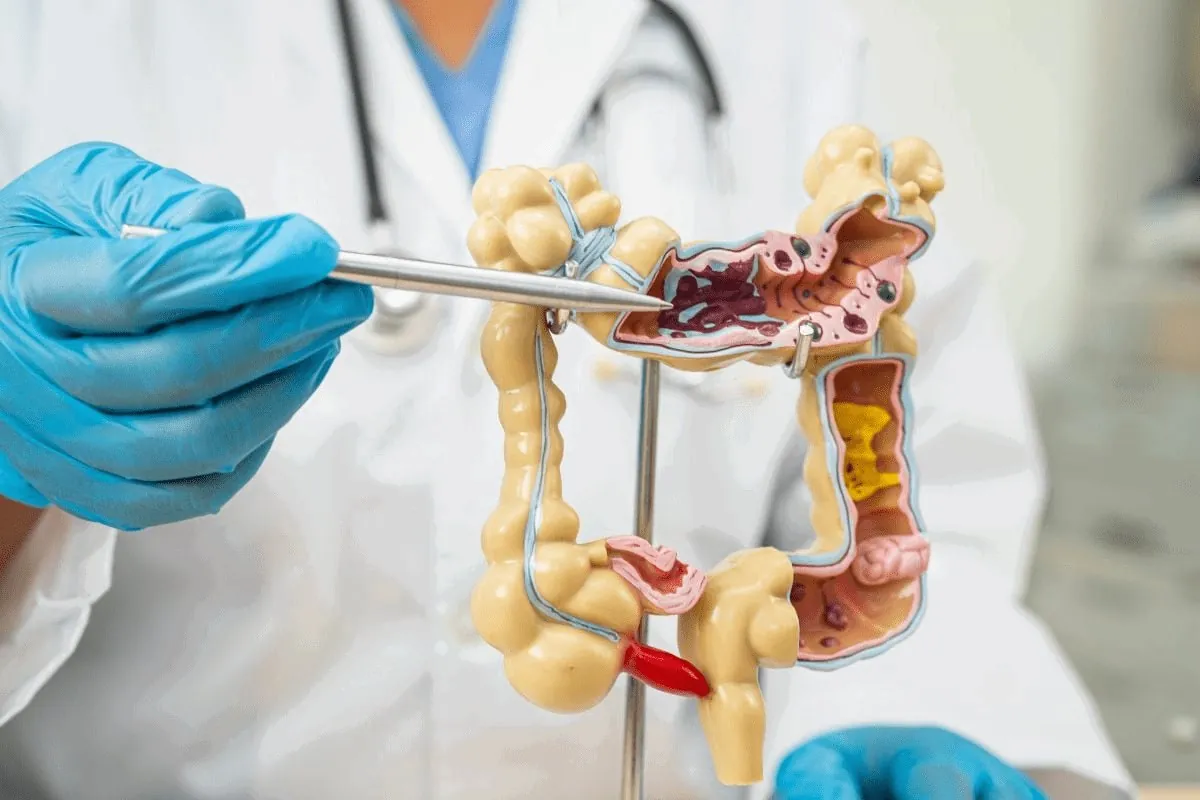
An Introduction to ESD (Endoscopic Submucosal Dissection)
Endoscopic Submucosal Dissection (ESD) is an endoscopic technique used to remove early-stage cancers or large growths (neoplasms) from the lining of the digestive tract (esophagus, stomach and colon). The tissue is removed from inside the organ, which in suitable cases avoids surgery to remove part of the organ.
The ESD Procedure
ESD is a technically demanding procedure carried out in several steps:
- Marking: The lateral margins of the lesion are carefully inspected, and electrocautery dots are placed around its periphery to define the resection boundaries.
- Lifting (Submucosal Injection): A specialized solution is injected into the submucosal layer directly beneath the lesion. This elevates the diseased mucosa, separating it from the underlying deep muscularis propria layer creating a cushion that makes the dissection safer.
- Circumferential Incision: Utilizing specialized endoscopic micro-knives passed through the endoscope, a complete 360-degree incision is made through the mucosa around the marked boundaries of the lesion.
- Submucosal Dissection: The operator dissects the connective tissue fibers within the submucosal layer step by step, freeing the neoplastic lesion from the underlying healthy muscular wall.
- En-Bloc Retrieval: The aim is to remove the lesion in one piece, as a single specimen (en-bloc resection).
Advantages of ESD
The main advantage of ESD over other techniques, such as Endoscopic Mucosal Resection (EMR), is that larger lesions can be removed in one piece:
- Complete Pathology Assessment: Because the specimen is removed in one piece, the pathologist can examine all its edges (margins) and confirm whether the lesion was removed completely (R0 resection).
- Organ Preservation: Neoplasms that historically required major surgical resection of a significant portion of the stomach or colon can, in suitable cases, be treated by removing only the diseased lining from within, leaving the organ in place.
- Reduced Local Recurrence Rates: Because the lesion is removed in one piece with clear margins, the risk of it coming back at the same site is lower than with piecemeal endoscopic techniques.
Patient Selection for ESD
- Early-stage gastric, esophageal, and colorectal carcinomas that have not invaded the deep muscularis propria layer.
- Broad, flat, or sessile lesions larger than 2 cm that cannot be safely or completely resected en-bloc using standard snare techniques (EMR).
- Recurrent or fibrotic lesions remaining from previous incomplete interventions.
Recovery After ESD
For suitable early-stage lesions, ESD can offer the following benefits:
- No External Incisions: The procedure leaves no abdominal scars or external wounds.
- Rapid Recovery: Patients are typically monitored in the hospital for only 1 to 2 days and can then gradually return to their daily routines.
- Preserved Digestive Function: Since the baseline volume and anatomy of the stomach or colon are unaltered, patients avoid many of the eating and digestion problems that can follow surgery to remove part of the stomach or colon.
ESD carries some risks, mainly bleeding and perforation (a hole in the wall of the stomach or bowel), which can often be treated endoscopically. If the pathology result shows deeper invasion, further treatment such as surgery may still be needed. Your doctor will discuss whether ESD is suitable for you.
Contact our team
How can we help you? Share your contact details to prepare your request.
How can we help?
By submitting you confirm you have read the privacy information and consent to the processing of your personal data.



