

Da Vinci (Single Port) Robotic Surgery
 JCI Accredited
 ISO Quality
 International Health Tourism Authorization
 Ministry of Culture and Tourism
 Global Hospital Rating
Liv Hospital offers the Da Vinci SP (Single Port) robotic surgery system. With this system, the surgeon performs complex operations through a single small incision instead of several. For suitable patients, this can mean less visible scarring and a more comfortable recovery.
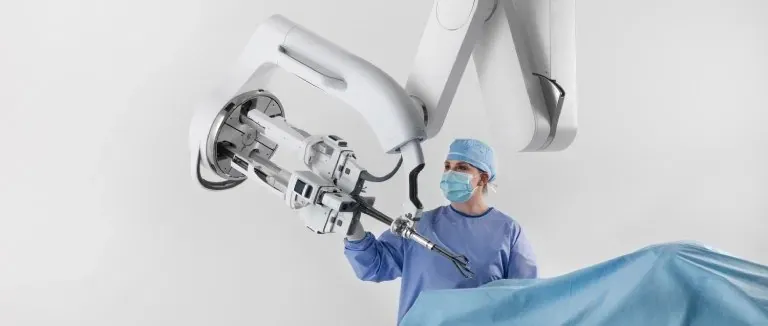
The Da Vinci SP System
While traditional robotic surgery (Multi-Port) involves procedures performed through 4 to 5 small incisions, the Da Vinci SP system manages the entire process through a single 2.7 cm incision.
The system consists of three multi-jointed surgical arms that move through the same access channel, along with a high-resolution (3D HD) camera. In the hands of trained surgeons at Liv Hospital, this design allows 360-degree movement, even in narrow and deep areas of the body, which supports precise surgery.
The Working Principle of the System
The Da Vinci SP system allows four instruments to pass through a single cannula (tube) with a diameter of approximately 2.5 cm:
- Three Articulated Instruments: Controlled by the surgeon to precisely cut, grasp, and suture tissues.
- One High-Resolution 3D Camera: Provides a clear, magnified view of the surgical site.
Key Features of the Da Vinci SP
- Advanced Maneuverability: The system’s instruments feature a “double-jointed” (triangulation) design. This allows them to fan out once inside a narrow space, providing the surgeon with a wide range of motion as if their own hands were inside the body.
- 3D High-Resolution Imaging: Seated comfortably at the surgical console, the surgeon manages the procedure using a lifelike image with depth perception.
- Access to Narrow Spaces: The system is designed to reach areas that can be hard to access with other methods, particularly in narrow, deep anatomical regions such as the throat or pelvis.
Contact our team
How can we help you? Share your contact details to prepare your request.
How can we help?
By submitting you confirm you have read the privacy information and consent to the processing of your personal data.
Single Port: A Minimally Invasive Approach to Surgery
While traditional robotic systems require multiple separate incisions, the Da Vinci SP technology manages the entire surgical process through one entry point. Both the high-resolution camera and advanced surgical instruments are inserted into the body through a single cannula. This means fewer incisions in the body wall.
Pain After Surgery
Postoperative pain is primarily caused by the trauma inflicted on surrounding tissues, nerves, and muscle structures during surgery. With a single entry point, the Da Vinci SP aims to limit this tissue damage. Many patients may therefore need fewer strong painkillers, although pain after surgery varies from person to person.
Surgical Benefits of the Da Vinci SP
Single-Port Robotic Surgery at Liv Hospital may offer the following benefits for suitable patients:
- Cosmetic Results: Because the surgery is often performed through the navel or natural body creases, the scar is often small and hard to see after healing.
- Less Pain, Less Medication: A single incision can reduce nerve and tissue damage, which may make the period after surgery less painful.
- Quick Discharge & Rapid Recovery: Depending on the operation, many patients can be discharged within 24 hours and return to daily life within days.
- Precision: 4K imaging and anti-shake (tremor-filtering) technology help our surgeons work precisely during delicate steps.
Specialties Using the Da Vinci SP
The Da Vinci SP is especially useful where surgeons must work in confined spaces. At Liv Hospital, it is used in:
- Urology: Prostate cancer, kidney tumors, urinary tract strictures, benign prostatic hyperplasia, and adenectomy.
- General Surgery: Colorectal surgery, hernia repairs, and thyroid surgery.
- Breast Surgery: Mastectomy.
- Thoracic Surgery
- Cardiovascular Surgery: Valve surgery.
- Gynecology: Uterine and ovarian surgeries, myomectomy.
- Ear, Nose, and Throat (ENT): Tumor surgeries performed via the oral cavity.
How the Da Vinci SP Differs from Other Robotic Systems
The main difference of the Da Vinci SP is the single small incision. Conventional robotic systems (multi-port) require multiple entry points in the abdomen, whereas the SP system inserts all instruments and the camera through one site, which can reduce surgical trauma.
Other Key Differences Include:
- Flexible, Multi-Jointed Design: Unlike classic robotic instruments that move at limited angles from fixed entry points, SP instruments unfold inside the body, offering high maneuverability in hard-to-reach areas (e.g., deep pelvis, head/neck, retroperitoneal regions).
- Dynamic Field of View: The 3D high-resolution camera shares the same single channel as the instruments, which helps with controlled, precise dissection.
- Enhanced Surgeon Ergonomics: The SP system allows the surgeon to manage all instruments more synchronously through a single-axis console, which supports coordination.
- Clinical Outcomes vs. System Limitations: In studies, the SP system’s single incision has been associated with reduced pain, bleeding and infection risk, and with shorter hospital stays. Note: As with any new technology, the learning curve and cost of the SP system may present some limitations compared to standard robotic systems.
The choice between single-port, multi-port, laparoscopic or open surgery depends on the operation and the patient. Your surgeon will discuss the options with you.
Patient Advantages of Da Vinci SP
Compared with open surgery and multi-port robotic surgery, the Da Vinci SP may offer the following advantages for suitable patients.
Cosmetic Results
For many patients, the appearance of the scar matters.
- Single Incision: The ~2.5 cm incision is usually made through a natural crease, such as the navel, so the scar is often hard to see.
- Cosmetic Satisfaction: This can be important for patients who are concerned about how their body will look after surgery.
Hospital Stay and Return to Daily Life
Because less tissue is disturbed, recovery can be faster. Depending on the operation, many patients can be discharged within 24 hours and return to work and social life sooner.
Less Postoperative Pain & Rapid Recovery
- Minimal Tissue Damage: One entry point can mean less muscle and nerve damage.
- Lower Medication Need: Many patients need less pain medication.
- Rapid Mobilization: Patients can get up, move around, and return to physical activity sooner.
Complication and Infection Risk
- Reduced Blood Loss: Precise robotic movements help limit injury to blood vessels.
- Infection Control: Fewer incisions can lower the likelihood of wound infections and incisional hernias.
Safe Intervention in Confined Spaces
When removing tumors in confined areas (such as the throat or deep pelvis), 3D imaging and agile maneuverability help protect surrounding nerves and vital organs, which may lower the risk of functional problems such as voice impairment or urinary incontinence.
Robotic Surgery with Liv Hospital
Robotic surgery depends on the surgical team as much as on the technology. At Liv Hospital, the Da Vinci SP system is used by surgical teams trained in robotic surgery.
“Does the robot perform the surgery, or the surgeon?” The surgeon does. The Da Vinci SP is a tool that extends the surgeon’s hand movements. Throughout the operation, the surgeon seated at the console controls every movement of the instruments.
Frequently Asked Questions (FAQ)
Is Da Vinci SP robotic surgery safe?
Da Vinci SP surgery is an established technique, but like any surgery it carries risks such as bleeding, infection or injury to nearby organs. The system’s 3D 4K imaging and anti-shake technology support precise movements, and the robot never acts on its own; the surgeon controls it at all times. Your surgeon will explain the risks that apply to your operation.
Will I be awake during the procedure?
No. Just like traditional open or multi-port surgeries, Da Vinci SP procedures are performed under general anesthesia. You will be completely asleep and pain-free throughout the entire operation.
Are robotic surgeries covered by health insurance?
Coverage varies depending on your specific private health insurance provider, your policy details, and the medical necessity of the procedure. We recommend contacting Liv Hospital’s patient services and your insurance company prior to surgery to get detailed information regarding your coverage.
How long does a Da Vinci SP surgery usually take?
The duration of the surgery depends on the type and complexity of the procedure being performed (for example, a routine hernia repair versus a complex prostate tumor removal). Your surgeon will provide you with a specific estimated timeframe during your consultation.
What happens if the robotic system experiences a technical issue during surgery?
The Da Vinci system has several built-in safety mechanisms, and technical problems are uncommon. If one does occur, the surgical team can switch to laparoscopic or open surgery to complete the operation safely.
Is the Da Vinci SP method more painful than standard laparoscopy?
It is generally less painful. Because the SP system requires only one small incision rather than the 4 or 5 required by traditional laparoscopy or multi-port robotic surgery, there is less trauma to the abdominal wall muscles and nerves, leading to a more comfortable recovery.
How do I prepare for my robotic surgery?
Preparation is very similar to any standard surgical procedure. You will likely be asked to fast (no food or drink) for a specific number of hours before the operation and may need to temporarily adjust certain medications, such as blood thinners. Your Liv Hospital surgical team will give you preparation instructions for your operation beforehand.
When can I shower after my operation?
Because the single incision is small (approximately 2.5 cm) and typically securely closed, most patients are cleared to take a brief shower within 24 to 48 hours after surgery. However, you should avoid soaking the area in baths, pools, or hot tubs until your surgeon confirms the incision is completely healed.
Can I undergo Da Vinci SP surgery if I have had previous abdominal surgeries?
Previous abdominal surgeries can cause internal scar tissue (adhesions), which can sometimes make minimally invasive approaches more challenging. However, it does not strictly rule you out. Your surgeon will review your medical history and current imaging to decide whether the Single Port approach is suitable for you.
What does Liv Hospital offer for Da Vinci SP surgery?
Liv Hospital offers Da Vinci SP robotic surgery within a multidisciplinary team that includes urology, general surgery, gynecology, ENT and other specialties. Your surgeon will assess whether the single-port approach is suitable for you and discuss the alternatives.



