

Bone Densitometry
 JCI Accredited
 ISO Quality
 International Health Tourism Authorization
 Ministry of Culture and Tourism
 Global Hospital Rating
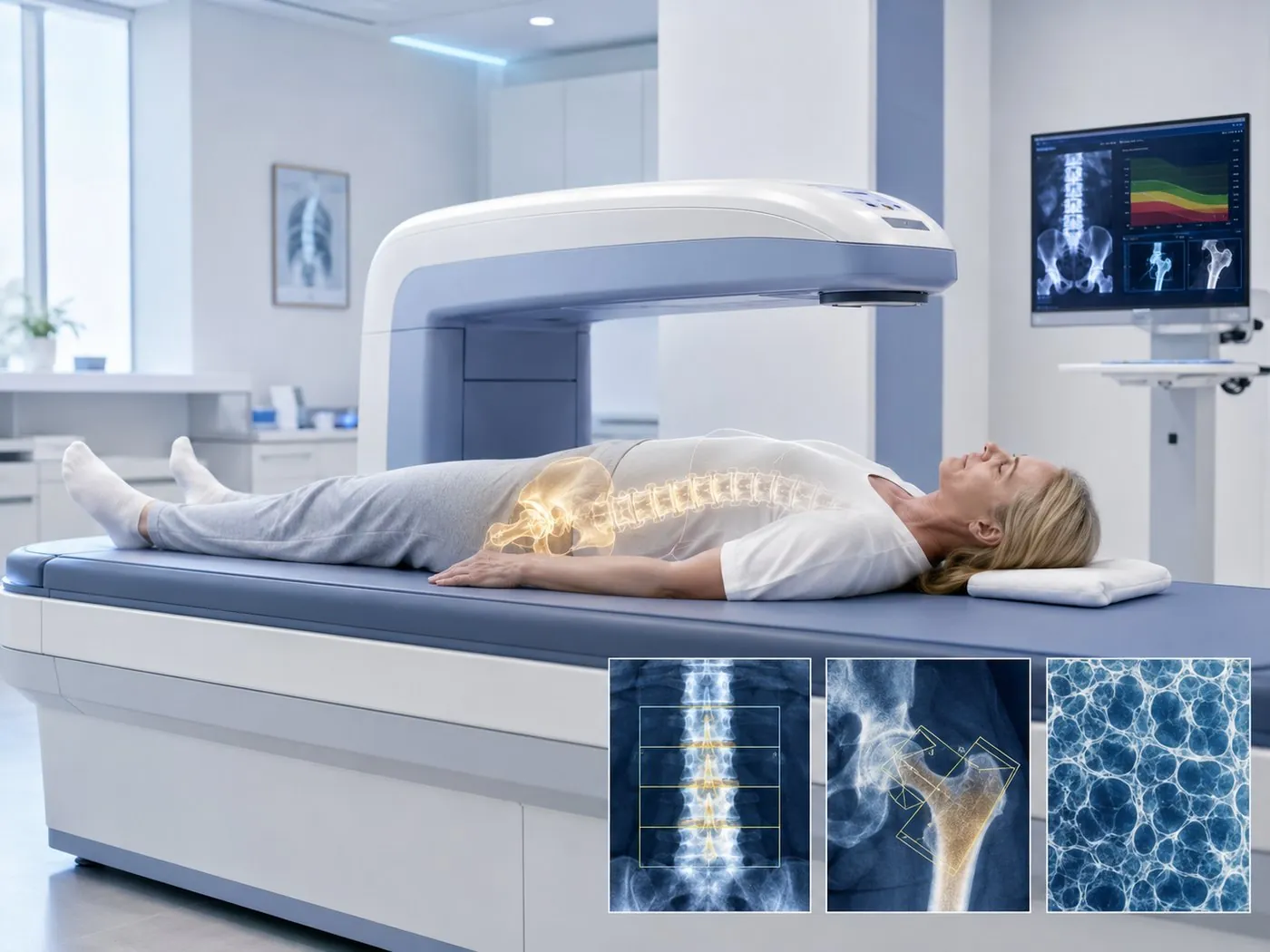
Bone Density Testing With DEXA/DXA
Bone densitometry, commonly called a bone density scan, measures how much mineral your bones contain. The results help doctors diagnose osteoporosis and estimate your risk of breaking a bone in the future.
The Working Principle of Bone Densitometry
The test uses DEXA (Dual-Energy X-ray Absorptiometry) technology:
- Very Low Radiation Dose: The scanner sends X-ray beams at two different energy levels. The dose is lower than that of a standard chest X-ray, roughly equal to less than one day of natural background radiation.
- Differential Absorption Measurement: Denser bone absorbs more of the X-rays. By measuring how much passes through, the system calculates bone mineral density (BMD) in grams per square centimeter (g/cm²).
- Rapid Acquisition: You lie on your back on a padded table, and the scan is completed within 10 to 15 minutes. The scan usually measures the lower spine (lumbar spine) and the upper thigh bone at the hip (proximal femur), because these are key sites for osteoporotic fractures.
Clinical Uses of Bone Densitometry
The test is used for diagnosis, risk assessment and treatment follow-up:
- Diagnosis of Osteoporosis: DEXA is the standard test used to diagnose osteoporosis, a condition in which bones gradually lose mass and strength, often without symptoms.
- Fracture Risk Stratification: Together with other risk factors, the results help estimate the chance of a future fracture from a minor fall (fragility fracture).
- Therapeutic Monitoring: Repeat scans show whether bone density has stayed stable or improved in people taking osteoporosis medicines (anti-resorptive or anabolic treatments).
Interpretation of Results: Understanding the T-Score
Results are mainly reported as a T-Score, which compares your BMD with that of a healthy young adult of the same sex at peak bone mass:
- -1.0 and Above: Normal (Healthy bone density).
- Between -1.0 and -2.5: Osteopenia (Low bone mass; bone density is lower than normal but not in the osteoporosis range. Your doctor may discuss lifestyle measures or treatment, depending on your overall fracture risk).
- -2.5 and Below: Osteoporosis (Bone density is low enough to diagnose osteoporosis; treatment is usually recommended).
Clinical Indications for a DEXA Scan
- All women aged 65 and older and all men aged 70 and older.
- Postmenopausal women under age 65 who have risk factors for fracture (such as smoking, low body weight, or a mother who had a hip fracture).
- People with a loss of height greater than 4 cm or an increasing forward curve of the upper back (kyphosis).
- People taking long-term corticosteroid (cortisone) medicines by mouth or injection.
- People who have had a fragility fracture (a broken bone after a minor bump or a fall from standing height).
Contact our team
How can we help you? Share your contact details to prepare your request.
How can we help?
By submitting you confirm you have read the privacy information and consent to the processing of your personal data.



